
Understanding the Growing Debate Around Vaping
The question of whether vaping is safer than smoking cigarettes has become one of the most discussed health topics in recent years. As traditional smoking rates decline in many parts of the world, vaping products such as Elfbar and other elf bar devices have surged in popularity. Many people see the vape as a modern alternative to cigarettes, often promoted as a less harmful option. However, the reality is more complex and deserves a balanced, evidence-based discussion.
Smoking cigarettes has been studied for decades, and its risks are well documented. Vaping, on the other hand, is relatively new. While it eliminates some of the most dangerous elements of tobacco combustion, it introduces new variables that scientists are still working to fully understand. To decide whether vaping is safer, it is important to look at how both habits work and how they affect the body over time.
How Cigarettes Harm the Body
Traditional cigarettes rely on burning tobacco to deliver nicotine. This process produces smoke that contains thousands of chemicals, many of which are known to be toxic or carcinogenic. When inhaled, cigarette smoke damages nearly every organ in the body, contributing to heart disease, lung cancer, chronic respiratory illness, and a range of other serious conditions.
The harm from smoking is not only linked to nicotine but also to tar, carbon monoxide, and numerous other byproducts of combustion. These substances accumulate in the lungs and bloodstream, creating long-term damage that can take years to fully appear. Because of this extensive evidence, there is little debate about the dangers of smoking cigarettes.
What Vaping Is and How It Works
Vaping works by heating a liquid, often called e-liquid or vape juice, to create an aerosol that users inhale. This liquid typically contains nicotine, flavorings, and other chemicals. Devices such as Elfbar are designed to be simple and accessible, which has contributed to their widespread use.
Unlike cigarettes, a vape does not burn tobacco. This difference is central to the argument that vaping may be safer. Without combustion, many of the harmful byproducts found in cigarette smoke are absent. However, the aerosol produced by a vape is not harmless. It still delivers nicotine and exposes the lungs to substances that may carry their own risks.

Comparing Nicotine Delivery and Addiction
Nicotine is a key factor in both smoking and vaping. It is highly addictive and affects the brain’s reward system, making it difficult for users to quit once they start. Both cigarettes and vape products deliver nicotine efficiently, although the experience can vary depending on the device and formulation.
Products like elf bar devices often appeal to users because of their smooth delivery and appealing flavors. This can make nicotine consumption feel less harsh than smoking, potentially leading people to use it more frequently. While vaping may reduce exposure to certain toxins, it does not eliminate nicotine addiction, which remains a significant health concern.
Are Vaping Products Less Toxic Than Cigarettes?
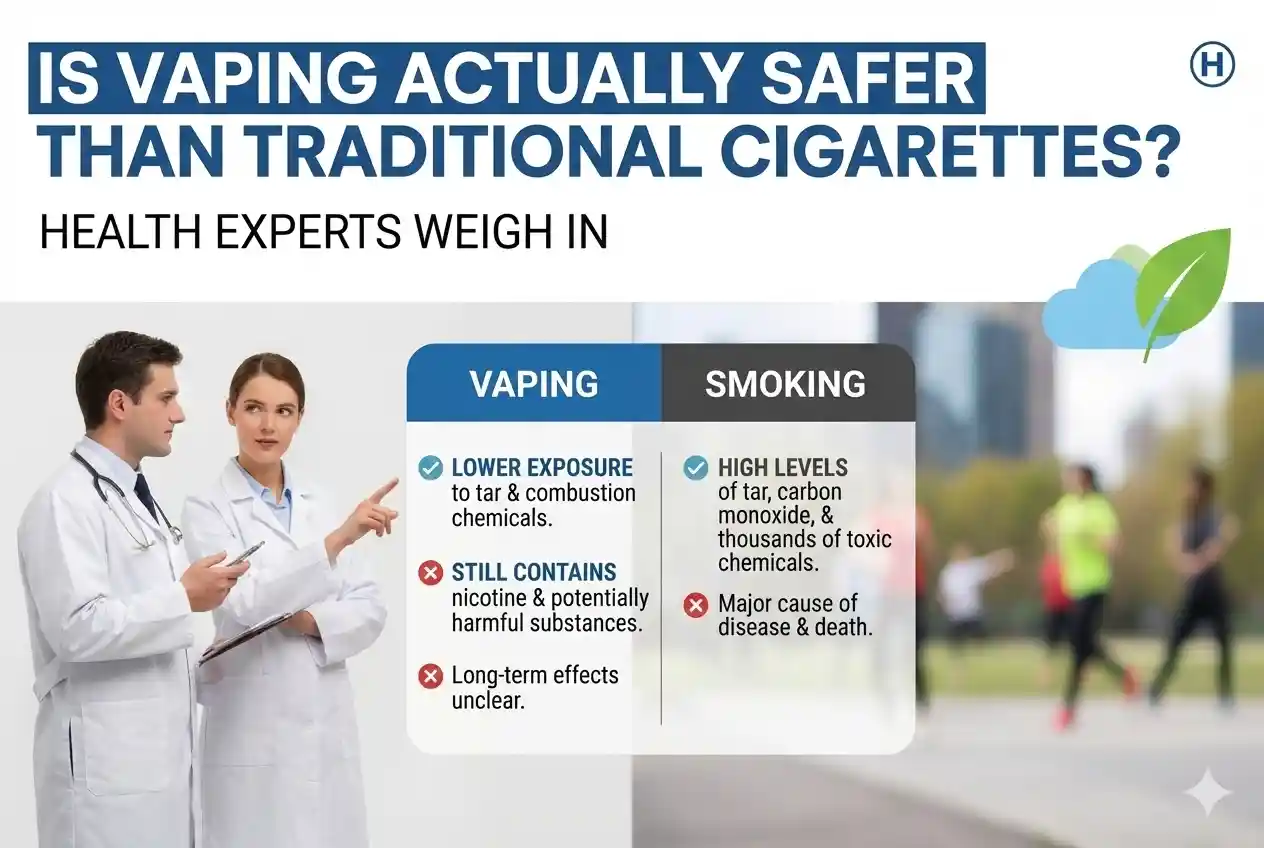
Many public health experts agree that vaping is likely less harmful than smoking cigarettes, but less harmful does not mean safe. Studies have shown that cigarette smoke contains far more toxic compounds than vape aerosol. This suggests that switching from smoking to vaping may reduce exposure to some dangerous chemicals.
However, vaping introduces other substances into the body, including flavoring agents and fine particles that can irritate the lungs. Because vaping is a relatively new phenomenon, the long-term effects are not yet fully known. This uncertainty makes it difficult to declare vaping as a clearly safe alternative, especially for people who have never smoked before.
The Role of Flavors and Modern Vape Brands
One reason brands like Elfbar have become so popular is their wide range of flavors. These flavors can make vaping more enjoyable and socially acceptable, especially among younger adults. While flavorings are often considered safe for consumption in food, inhaling them is a different matter.
Research has raised concerns that some flavoring compounds may cause inflammation or other respiratory issues when inhaled regularly. This does not mean every flavored vape is dangerous, but it highlights the need for caution. The appealing design and taste of modern vape products can sometimes mask the fact that they still carry health risks.
Vaping as a Smoking Cessation Tool
Some smokers turn to vaping as a way to quit cigarettes. For individuals who already smoke, switching to a vape may reduce exposure to the most harmful aspects of tobacco smoke. In this context, vaping can be seen as a harm reduction approach rather than a risk-free habit.
The effectiveness of vaping as a quitting aid varies from person to person. Some smokers successfully transition away from cigarettes and eventually reduce their nicotine intake. Others end up using both cigarettes and vape products, which may limit any potential health benefits. The key factor is whether vaping replaces smoking entirely or simply adds another source of nicotine.
Health Concerns for Non-Smokers and Young Users
A major concern among health professionals is the rise of vaping among people who never smoked cigarettes. For these individuals, taking up a vape introduces nicotine addiction and potential respiratory risks that would otherwise be avoided. The perception that vaping is safe can lead to casual use without a full understanding of the consequences.
Young users are particularly vulnerable, as nicotine can affect brain development and concentration. Devices like elf bar products, with their sleek design and flavors, can be especially attractive to this audience. This has led to increased regulation in many regions to limit youth access and marketing practices.
Secondhand Exposure and Social Impact
Another aspect to consider is secondhand exposure. While vape aerosol is generally considered less harmful than secondhand cigarette smoke, it is not simply water vapor. People nearby may still inhale nicotine and other particles, raising concerns in shared spaces.
From a social perspective, vaping has changed how nicotine use is perceived. It is often seen as cleaner and more acceptable than smoking, which can normalize regular use. This shift may reduce smoking rates but could also maintain widespread nicotine dependence in a different form.
So, Is Vaping Safer Than Smoking?
When comparing vaping to smoking cigarettes, most evidence suggests that vaping exposes users to fewer harmful chemicals. For long-term smokers who cannot quit nicotine entirely, switching to a vape may reduce certain health risks. However, this does not mean vaping is harmless or recommended for everyone.
The safest option for health remains avoiding both smoking and vaping altogether. For non-smokers, starting to vape offers no clear benefit and introduces unnecessary risks. For smokers, vaping may be a step toward harm reduction, but it should ideally be part of a broader plan to reduce or quit nicotine use entirely.
Making an Informed Choice
Deciding whether vaping is safer than smoking depends largely on individual circumstances. Understanding the risks, benefits, and unknowns is essential. Products like Elfbar and other vape devices represent a shift in how nicotine is consumed, but they do not eliminate health concerns.
Ultimately, informed choices come from reliable information rather than marketing claims or assumptions. As research continues to evolve, staying aware of new findings will help users make decisions that align with their long-term health goals.