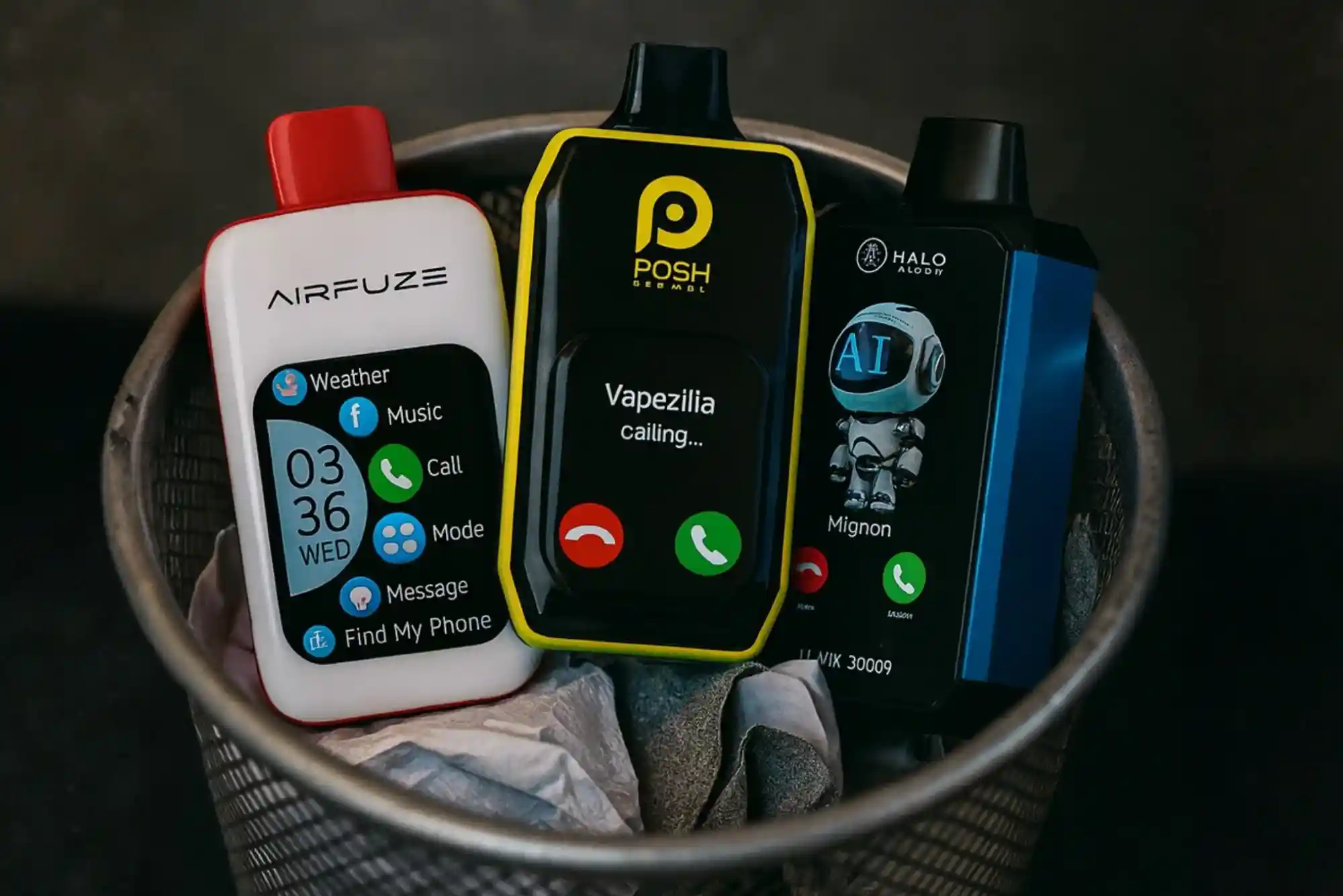
Smart vaping technology is changing how people understand their vaping habits. Traditional devices provide little information about consumption. Modern connected devices can collect usage data and display it through digital interfaces. This makes it easier to see how frequently a device is used.
Understanding How Smart Vapes Help Monitor Puff Count & Nicotine Levels starts with the technology inside these devices. Sensors can detect individual inhalation events and record usage patterns. Depending on the device, companion software may then organize this information into useful statistics.
For people interested in consumption awareness, these features can provide greater visibility. However, monitoring does not make vaping risk-free. Nicotine remains addictive, and smart features should not be viewed as a health guarantee.
How Smart Vapes Help Monitor Puff Count & Nicotine Levels
Smart vapes use electronic sensors and onboard processors to detect vaping activity. When a user takes a puff, the device can identify changes in airflow or pressure. The system then records that event as a puff.
More advanced models can connect with smartphones through Bluetooth. Their companion applications may display information such as daily puff counts, usage frequency, and estimated consumption. Some systems also provide historical records for comparison.
The exact information depends on the manufacturer and device design. A puff counter may also differ from actual nicotine intake. Therefore, users should treat displayed figures as estimates rather than precise medical measurements.

How Puff Counting Technology Works
Puff counting begins with sensors that detect airflow through the device. When inhalation reaches a particular threshold, the electronic system registers an event. The device can then store the event in its internal memory.
Some devices use pressure sensors, while others rely on airflow detection. Software processes the sensor signal and determines whether it represents a genuine puff.
This technology can help identify patterns over time. For example, a user may notice that vaping becomes more frequent during certain periods. That information can create greater awareness of personal usage.
However, puff duration and inhalation intensity can vary significantly. Two puffs do not necessarily deliver identical amounts of aerosol or nicotine.
Monitoring Nicotine Levels in Smart Vapes
Nicotine monitoring is more complicated than simply counting puffs. The amount of nicotine consumed can depend on liquid concentration, device power, puff duration, airflow, and individual inhalation behavior.
A smart system may use information about the e-liquid or cartridge to estimate nicotine consumption. It can combine this information with recorded puff activity. The resulting figure is generally an estimate rather than a direct measurement of nicotine entering the bloodstream.
This distinction is important when evaluating smart vaping technology. Smart devices tracking puff count and nicotine can improve awareness, but their readings should not be interpreted as laboratory-grade measurements.
Some systems may allow users to enter the nicotine concentration of their e-liquid. The software can then use that information when calculating estimated consumption.
Why Puff Tracking Matters
Puff tracking can make otherwise invisible habits easier to recognize. Without tracking, frequent vaping can become an automatic behavior throughout the day.
A digital record can show how often a device is used. Users may also compare usage between different days or periods.
For example, someone might discover that their puff count increases while working, driving, or socializing. Recognizing these patterns can help users understand the situations associated with frequent vaping.
Tracking can therefore support informed decision-making. It does not, however, guarantee reduced nicotine consumption.
Bluetooth Connectivity and Smartphone Apps
Bluetooth is one of the most useful features found in some smart vaping devices. It allows a compatible vape to communicate with a smartphone application.
After pairing, the app may receive usage information from the device. Depending on the system, this can include puff counts, usage frequency, battery information, and estimated liquid consumption.
A smartphone interface can make data easier to understand. Instead of viewing a small screen on the device, users can review information through a larger digital dashboard.
Connected systems may also store historical information. This allows users to compare current behavior with previous usage.
Understanding Estimated Nicotine Consumption
Nicotine estimation requires several pieces of information. The nicotine concentration of the e-liquid is one important factor. Puff frequency and approximate liquid consumption can provide additional context.
Yet the calculation has limitations. A person’s puff style can change the amount of aerosol produced. Device temperature and power settings can also influence aerosol generation.
Consequently, an app’s nicotine figure should be considered an approximation. It should not be treated as an exact measurement of absorbed nicotine.
This is especially important because nicotine absorption varies between individuals. Biological factors can influence how much nicotine reaches the bloodstream.
Smart Vapes and Usage Awareness
One major advantage of connected vaping technology is increased visibility. Users can see information that traditional disposable or basic vape devices usually do not provide.
A puff counter can reveal how often someone reaches for the device. Historical records can reveal whether usage is increasing or decreasing.
This information may encourage users to think more deliberately about their habits. It can also make discussions about consumption more concrete.
Still, tracking alone does not change behavior. The value comes from how responsibly users interpret and respond to the information.
Accuracy Limitations of Puff Counters
No electronic puff counter should automatically be considered perfectly accurate. Sensors operate according to predefined thresholds and algorithms.
A very short inhalation might not register. Conversely, unusual airflow or accidental activation could potentially produce an inaccurate reading.
Different devices also use different sensing technologies. Therefore, results from one product should not automatically be compared with another.
Users should focus on trends rather than assuming every recorded puff represents an exact measurement.
Can Smart Vapes Control Nicotine Intake?
Some connected vaping systems may offer settings intended to help users manage consumption. Depending on the device, these features can include usage limits, alerts, or configurable nicotine information.
Such tools can provide reminders about consumption. However, their availability varies considerably between products.
Users should also understand that a software limit is not the same as a medical treatment. People who want to stop using nicotine may benefit from evidence-based cessation support from qualified healthcare professionals.
Smart technology can provide information, but it cannot replace professional guidance.
Privacy and Data Considerations
Connected devices can generate personal usage information. This may include timestamps, puff counts, device identifiers, and other behavioral data.
Before using a companion application, users should review its privacy policy. It is useful to understand what information is collected and whether it is stored locally or transmitted to a server.
Bluetooth connections should also be configured carefully. Users should keep applications updated and avoid pairing devices with unknown phones.
Understanding data practices is an important part of using any connected consumer technology.
Choosing a Smart Vape With Monitoring Features
People researching smart vaping devices should consider what information the product actually measures. Marketing terms can sometimes make basic features sound more precise than they are.
Look for clear explanations of the device’s sensors and tracking system. Check whether puff data is stored locally or synchronized with an application.
It is also useful to determine whether the device supports Bluetooth connectivity. Users should check which smartphone platforms are supported before purchasing.
Most importantly, understand the difference between estimated nicotine consumption and measured nicotine absorption. These are not the same thing.
Benefits and Limitations of Smart Monitoring
Smart monitoring provides several useful advantages. It can make vaping behavior more visible and easier to review.
Puff tracking can highlight changes in usage. Smartphone applications can organize historical data. Bluetooth connectivity can simplify access to information.
However, these systems also have limitations. Puff counts can be imperfect, nicotine estimates may be approximate, and features vary between manufacturers.
Smart vape apps for Android and iOS can help users track device settings, monitor usage, and manage vaping routines. From battery monitoring to personalised reminders, these apps offer convenient features for compatible devices. Exploring the Best Smart Vape Apps for Android & iOS can help users understand available tools and choose options that suit their needs.
Frequently Asked Questions
How accurate are vape puff counters?
Vape puff counters can provide useful estimates, but they are not necessarily perfectly accurate. Sensor sensitivity and software algorithms affect their readings.
Can a vape tell you how much nicotine you consume?
Some smart devices can estimate nicotine consumption using puff data and e-liquid information. However, they generally cannot directly measure the amount of nicotine absorbed by the body.
Do smart vapes track your usage?
Some smart vapes can track usage through onboard sensors. Compatible applications may record puff counts, frequency, and other device information.
Can Bluetooth vapes track nicotine intake?
Bluetooth-enabled vapes may estimate nicotine intake using recorded usage data and known e-liquid concentrations. The result should be treated as an estimate.
Does counting vape puffs help reduce vaping?
Tracking may increase awareness of usage patterns. However, counting puffs alone does not guarantee reduced vaping or nicotine consumption.
Conclusion
Smart vaping technology provides a clearer view of consumption than traditional devices. Puff sensors can record inhalation events and connected applications can organize the resulting data.
For reliable insights, useful resources, and practical solutions, visit Neovapex to explore a range of helpful content and services. The platform is designed to make information easy to discover while offering valuable resources for readers, businesses, and everyday users.
Related Reading: Why Smart Vapes Are Ideal for Advanced Vapers
Related Reading: How Smart Vapes Monitor Your Usage in Real Time
Related Reading: Smart Vapes for Beginners: What to Buy in 2025
Related Reading: What Are Smart Vapes? A Beginner’s Guide in 2025
Related Reading: Smart Vapes with Auto Temp Control: A Game Changer