
Introduction
Vape sculptures and artistic installations have emerged as an unusual intersection between product design, contemporary art, popular culture, and visual experimentation. What was once viewed primarily as a functional consumer object is increasingly being examined through the lens of shape, colour, material, technology, and cultural symbolism. Artists and designers can transform familiar vape-inspired forms into large-scale sculptures, conceptual displays, immersive installations, and thought-provoking objects.
This creative approach is not necessarily about promoting vaping. Instead, it can explore how consumer products influence modern visual culture and how everyday objects can become subjects of artistic interpretation. From oversized geometric forms to abstract arrangements using discarded electronic components, vape-related artwork can raise questions about technology, consumption, identity, sustainability, and design.
For anyone interested in contemporary design, vape sculptures and artistic installations provide an intriguing example of how familiar objects can be reimagined in an artistic context.
What Are Vape Sculptures and Artistic Installations?
Vape sculptures are three-dimensional artworks inspired by the appearance, structure, technology, or cultural associations of vaping devices. They may reproduce recognisable shapes or use vape-related components as starting points for abstract artistic concepts.
Artistic installations take the idea further. Rather than focusing on a single object, an installation can combine sculpture, lighting, sound, digital media, architecture, and spatial design. The viewer may walk around, through, or even interact with the work.
The distinction is important because the artistic value does not necessarily depend on creating a realistic representation of a vape device. A contemporary artist might use cylindrical forms, metallic surfaces, translucent materials, LED lighting, or electronic components to communicate an idea without creating a literal replica.

From Consumer Object to Art Object
The transformation of an ordinary object into artwork is not new. Artists have long challenged conventional ideas about what belongs in a gallery by using industrial materials, household products, packaging, machinery, and discarded objects.
Vape-inspired artwork fits into this wider tradition. Its visual language can reflect the technological character of modern consumer products while encouraging audiences to think beyond their everyday purpose.
Why Vape Sculptures Attract Artistic Attention
One reason vape sculptures and artistic installations attract attention is their distinctive visual language. Modern vaping devices often incorporate compact engineering, smooth curves, metallic finishes, transparent sections, illuminated interfaces, and carefully designed packaging.
These characteristics give artists numerous visual elements to reinterpret.
Technology as a Design Language
Electronic devices often communicate technological sophistication through their surfaces and proportions. Minimal buttons, seamless edges, polished materials, and illuminated components can create a futuristic appearance.
Artists can exaggerate these characteristics to produce sculptures that feel industrial or science-fiction inspired. Enlarging a small electronic object into a monumental sculpture, for example, can completely change how audiences perceive it.
Colour and Light
Colour is another important component. Bright gradients, reflective finishes, translucent surfaces, and controlled illumination can dramatically influence an installation.
LED lighting can be particularly effective when used as part of a larger conceptual environment. Rather than simply illuminating a sculpture, light can become part of the artwork itself, creating changing shadows, reflections, and visual movement.
Materials Used in Vape-Inspired Art
The materials selected for vape sculptures and artistic installations can significantly influence their appearance and message.
Artists may work with conventional sculptural materials such as resin, acrylic, aluminium, steel, glass, wood, or clay. Others may incorporate electronic components, recycled materials, packaging, wires, circuit boards, or non-functional objects.
Metal and Industrial Materials
Metal can communicate durability, engineering, and industrial production. Brushed aluminium and polished steel can create a modern appearance, while rough or corroded surfaces can communicate ideas about ageing, waste, and mass production.
Acrylic and Transparent Materials
Transparent and translucent materials can create an especially technological aesthetic. Acrylic, for example, can interact effectively with coloured light and create layered visual effects.
Recycled and Repurposed Materials
Repurposing discarded electronic materials can introduce a sustainability dimension. Artists can use obsolete components to question the short life cycles of consumer technology.
However, responsible artists should consider safety when handling electronic components, batteries, plastics, or contaminated waste. Materials should be cleaned, made safe, and professionally prepared before becoming part of a public installation.
The Role of Form and Scale
Scale can completely transform the meaning of an artwork. A small object that fits comfortably in a person’s hand becomes something entirely different when enlarged several metres.
This principle is especially useful for vape sculptures and artistic installations. Artists can exaggerate familiar proportions to create monumental forms that invite viewers to reconsider an everyday technological object.
Monumental Sculptures
Large sculptures can create an immediate visual impact in galleries, exhibitions, festivals, or public spaces. Their size can turn a familiar consumer object into an architectural feature.
The goal is not simply to make something bigger. Successful large-scale work considers how visitors move around it, how shadows fall across its surface, and how it interacts with surrounding architecture.
Abstract Forms
Abstract sculpture offers another approach. Instead of reproducing a recognisable vape, an artist might extract only certain characteristics, such as cylindrical forms, airflow patterns, geometric structures, or electronic components.
This can produce artwork that remains visually interesting even to viewers who have no connection to vaping.
Vape Sculptures and Contemporary Design Trends
The relationship between consumer products and visual culture is increasingly important in contemporary design. Products are no longer judged exclusively by their practical function. Shape, branding, material selection, sustainability, and visual identity can all influence how people perceive an object.
For broader context on evolving visual styles and design movements, explore design and aesthetics trend coverage.
Vape sculptures and artistic installations can therefore be understood as part of a wider conversation about product aesthetics. They demonstrate how industrial design can influence artistic expression and how commercial objects can become cultural references.
Minimalism and Futuristic Design
Minimalist forms remain influential across architecture, product design, and contemporary art. Clean surfaces and simple geometric structures can make vape-inspired sculptures appear architectural rather than commercial.
Futuristic design can take a different approach, using glowing elements, metallic surfaces, digital screens, and complex mechanical details. These characteristics can evoke ideas about automation, artificial intelligence, biotechnology, and the future of consumer technology.
Installations That Tell a Story
The strongest vape sculptures and artistic installations are often more than visually attractive objects. They can communicate a narrative.
An artist might create an installation about consumerism, technological dependence, disposable culture, or the environmental consequences of electronic waste.
Exploring Consumer Culture
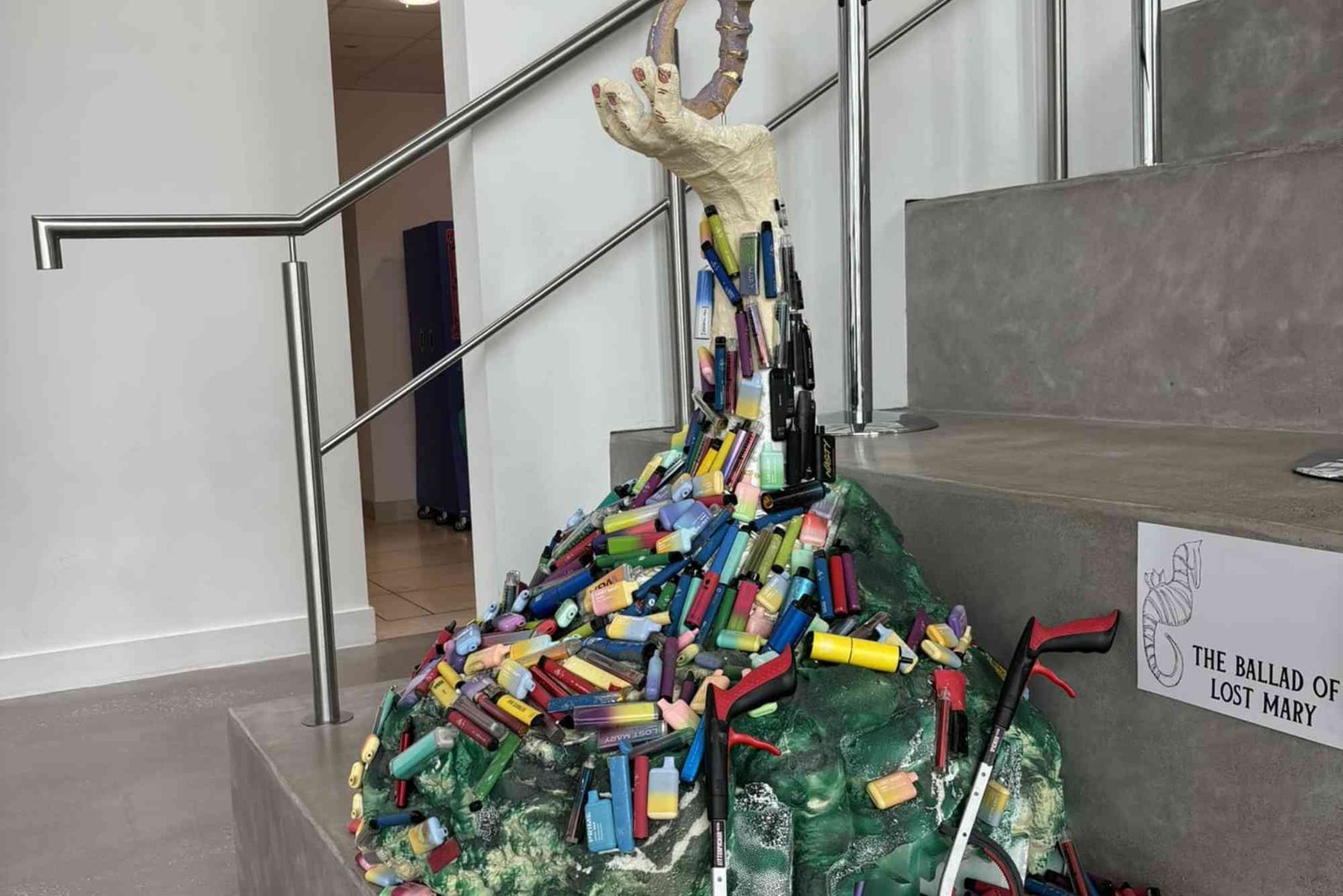
A gallery installation could place hundreds of non-functional objects into an overwhelming arrangement. The visual abundance may encourage viewers to consider how quickly consumer products are manufactured, purchased, replaced, and discarded.
In this context, the vape becomes a symbol rather than a product. The artwork can examine broader patterns of consumption.
Examining Disposable Culture
Disposable technology creates particularly interesting artistic possibilities. A sculpture constructed from cleaned and safely prepared discarded components could represent the short lifespan of modern products.
The contrast between temporary consumer goods and permanent artistic objects can create a powerful conceptual tension.
Digital Technology and Interactive Installations
Contemporary artists increasingly combine physical sculpture with digital technology. Sensors, projections, programmed lighting, and interactive displays can turn a static object into an evolving experience.
A vape-inspired installation could respond to movement, sound, or proximity without involving any functional vaping activity.
Projection Mapping
Projection mapping can transform the surface of a sculpture by covering it with animated imagery. A simple geometric form can become a changing digital landscape through carefully controlled projection.
Interactive Lighting
Motion sensors and programmable LEDs can allow an installation to react as visitors approach. This creates a relationship between the viewer and artwork, making the experience more immersive.
Such techniques also demonstrate how contemporary sculpture increasingly overlaps with digital media and experiential design.
Ethical and Environmental Considerations
The artistic use of vape-related objects comes with responsibilities. Because vaping products are associated with health, nicotine, electronic waste, and youth-access concerns in many markets, artists and exhibition organisers should carefully consider context.
An installation should make its artistic purpose clear rather than unintentionally functioning as product advertising.
Avoiding Promotional Presentation
There is an important difference between analysing a consumer object and promoting it. Artistic work can explore its shape, cultural meaning, environmental impact, or technological characteristics without encouraging consumption.
This distinction becomes particularly important in public exhibitions, educational settings, and venues accessible to younger audiences.
Responsible Material Handling
Artists should also handle discarded electronic products responsibly. Batteries and electronic components can present safety and environmental risks if damaged or improperly stored.
Professional recycling, safe preparation, and appropriate display practices are essential when incorporating electronic waste into artwork.
How Artists Can Develop a Strong Concept
Creating successful vape sculptures and artistic installations starts with an idea rather than an attractive object.
The artist should first decide what the work is communicating. Is it examining consumerism? Technology? Waste? Digital culture? Branding? Human interaction with machines?
Once the central concept is established, material, colour, scale, lighting, and placement can support the message.
Start With the Concept
A clear concept gives the artwork direction. Without one, a sculpture may simply resemble an enlarged product display.
A stronger approach is to identify a question that the artwork wants viewers to consider. The visual elements can then be selected to reinforce that question.
Consider the Audience Experience
Installation art is experienced in physical space. Artists should think about where viewers will stand, how they will move, what they will see first, and how the work changes from different angles.
Sound, lighting, negative space, and surrounding architecture can all influence interpretation.
The Future of Vape Sculptures and Artistic Installations
As contemporary art continues to absorb technology and popular culture, vape sculptures and artistic installations may develop in increasingly experimental directions.
Future projects could combine physical sculpture with augmented reality, generative digital art, projection systems, interactive sensors, and recycled electronic materials. These approaches could shift attention away from the original consumer object and toward broader questions about technology and modern life.
The most compelling future works are likely to focus on concepts rather than novelty. A sculpture becomes more meaningful when its unusual subject helps audiences examine something larger, whether that is consumption, environmental responsibility, technological change, or the relationship between humans and designed objects.
Vape sculptures and artistic installations demonstrate how contemporary artists can transform familiar technological objects into subjects for creative exploration. Through scale, materials, lighting, abstraction, digital technology, and spatial design, these works can examine themes that extend far beyond vaping itself.
Crafting Identity: The Art Behind Every Puff explores how thoughtful design, visual details, branding, and creative concepts shape the identity of vaping products. From colours and packaging to distinctive forms, artistic choices can create a memorable impression and help brands communicate their unique personality while connecting with their intended audience.
FAQs
What are vape sculptures?
Vape sculptures are three-dimensional artworks inspired by the shape, technology, materials, or cultural symbolism associated with vaping devices. They may be realistic, oversized, abstract, or conceptual.
What is an artistic installation?
An artistic installation is an artwork designed for a particular space or environment. It can combine sculpture with lighting, sound, video, digital technology, architecture, or interactive elements.
Why do artists use consumer products in sculptures?
Consumer products can represent broader ideas about technology, identity, culture, manufacturing, and consumption. Turning familiar objects into art encourages audiences to view them from a different perspective.
Can vape devices be used in artwork?
Non-functional objects or safely prepared components may be incorporated into artwork, depending on local regulations, venue policies, and material-safety requirements. Artists should handle batteries and electronic waste responsibly.
Are vape sculptures intended to promote vaping?
Not necessarily. An artwork can examine vaping-related objects as cultural or technological symbols without promoting their use. Context and presentation are important, particularly in public exhibitions.
How can technology improve an art installation?
Technology can introduce interactive lighting, projection mapping, sensors, sound, digital imagery, and augmented experiences. These elements can make an installation more immersive and responsive to visitors.
What makes an artistic installation successful?
A successful installation generally combines a clear concept with thoughtful material choices, spatial planning, visual composition, and an engaging audience experience. Strong installations give viewers something meaningful to consider rather than relying only on visual novelty.
Discover fresh insights, useful guides, and engaging content on vaping, technology, lifestyle, and modern trends. Visit Neovapex for informative articles, helpful resources, and updates designed to keep readers informed. Explore the latest topics and practical information in one convenient place, and stay connected with new content from Neovapex.
Related Reading: Vape Innovation and Artistic Collaboration
Related Reading: The Artistic Evolution of Vape Packaging